History Lessons - Reed Hundt
[This is an adaptation of a keynote speech that Reed Hundt gave at the American Enterprise Institute on Feb 10. Read the full speech here.]
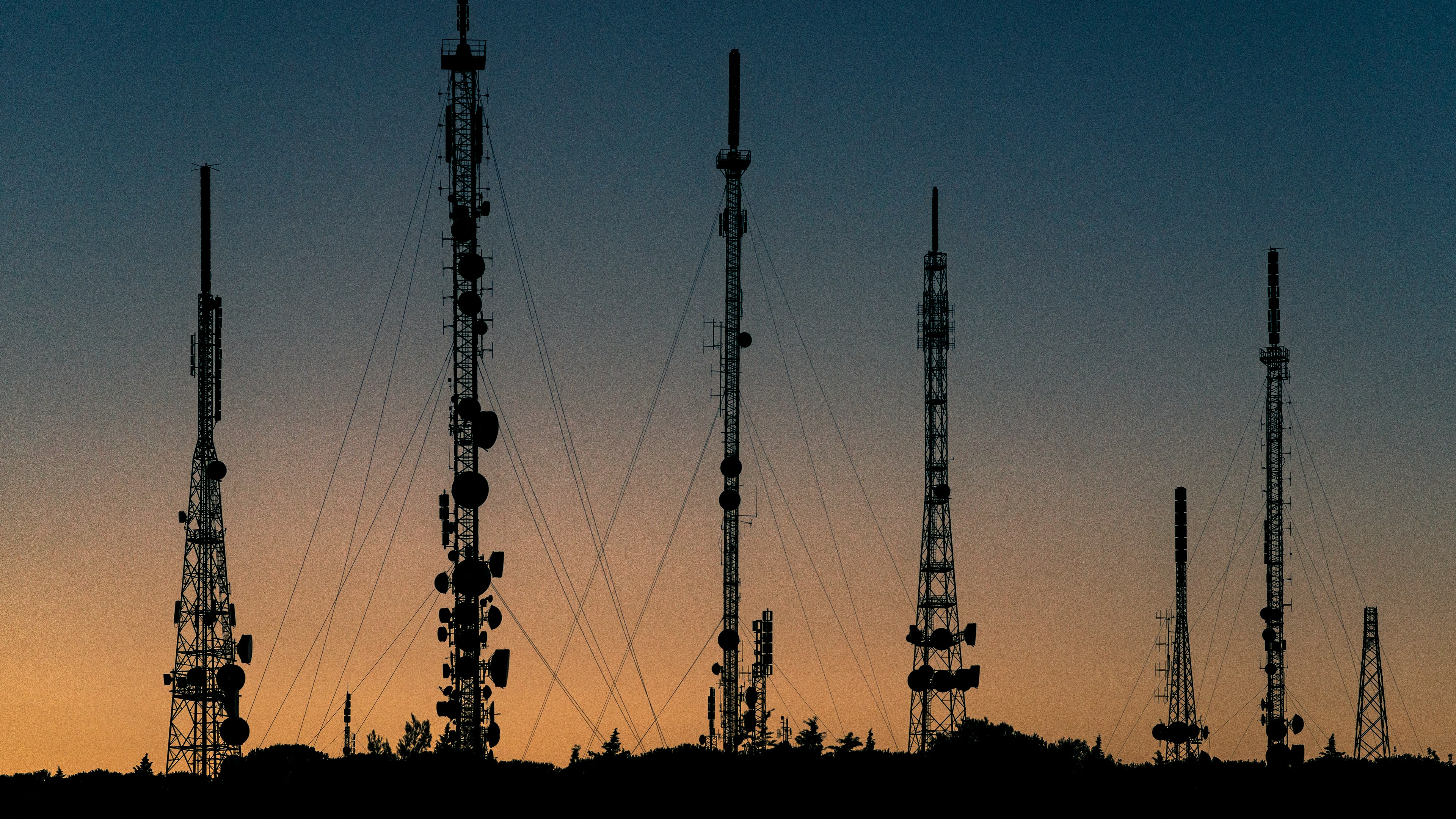
Thirty years ago, digitization, fiber optics, and microprocessors transformed the world. Software turned them into digital cellular and the Internet, lifting one billion people from extreme poverty and enabling us to halve the death toll of COVID compared to the Spanish flu — despite a world four times larger. Today, those same technologies have given rise to artificial intelligence. The question before us: what can we learn from how government handled that earlier revolution?
Don’t Make the Same Mistakes Twice
First, protect children. The 1996 Communications Decency Act tried to shield minors online, but the Supreme Court gutted it while preserving Section 230’s broad immunity for platforms. That did not turn out well. Congress must now pass an AI Decency Act — and if the Court strikes it down again, we should consider amending the Constitution. At minimum, Section 230 must be limited so it no longer protects perpetrators of AI-driven assaults on our youth.
Second, plan for the bust. The 1990s tech boom funneled two trillion dollars into fiber, towers, and chips before the NASDAQ crashed 80% in 2002. Today, AI investment is on a similar scale — but concentrated in fewer than ten companies, making a sudden retrenchment far more likely. We should tax AI giants now to build a rainy-day fund, and require data center builders to invest in clean water, power, roads, and housing for surrounding communities, regardless of whether the AI gold rush pans out.
Third, don’t neglect what isn’t getting funded. The tech boom of the ’90s drew attention away from health care and education. We cannot make the same mistake while chasing AI.
Fourth, defend democracy. The Internet let everyone find the like-minded and gave powerful weapons to misinformation. AI could accelerate that threat or — if we’re deliberate — help us refound democracy on sounder principles.
Good Lessons to Remember
Congress should create a dedicated, bipartisan AI agency — as it did with the FCC for telecommunications — rather than scattering responsibility across a dozen offices. Smart people in fragmented roles produce fragmented results.
Embrace creative destruction. We did not bail out AT&T when new technologies made its business model obsolete, nor put our thumb on the scale for favored companies. The government should support AI as an industry without rescuing specific losers.
Use AI in government now. As the Clinton White House moved federal operations onto the Internet quickly, every federal, state, and local employee should be learning and using AI today.
Tap AI wealth to address the deficit. In the late ’90s, Internet IPO stock option income produced unexpected surpluses. Today’s deficit is four times larger as a share of GDP. The government needs a tax regime that captures a fair share of AI’s enormous wealth creation before long-term interest rates and dollar debasement do lasting damage.
Compete globally — don’t wall off China. The seven largest American companies by market cap are global because we opened world markets in the 1990s. AI firms need a coherent international strategy based on fair competition, not isolation.
Enact an AI E-Rate. From 1997 onward, the E-Rate networked every classroom and library in America. Congress should create the same kind of matching-grant program to ensure AI’s benefits reach everyone — not a handout, but a hand up.
What Could Go Wrong?
A Beijing official once told me he used the Internet to jail two million dissidents more efficiently than his army of spies ever could. AI will give authoritarian governments — and potentially our own — even greater surveillance power. We need an AI privacy law.
Economic inequality is another danger. In the 1990s, income rose across all five quintiles. Today inequality is far worse, and AI investment is concentrated in a handful of already-wealthy firms. No democracy survives an asymptotic rise in inequality. Congress must re-strike the balance between profit and shared prosperity.
Finally, if AI displaces 40% of jobs, we cannot assume workers will adapt quickly enough to avoid social upheaval. Public investment in community colleges, the humanities, and jobs that require human judgment — construction, nursing, therapy — will be essential.
Conclusion
Let me close with what could go right in ways we cannot yet imagine: curing cancer, eliminating traffic deaths, making clean energy so cheap it costs nearly nothing, teaching us to live with one another through deliberative AI-assisted democracy, and exploring the solar system.
The communications revolution of thirty years ago was built by a government willing to be creative, bipartisan, and forward-looking. Miranda’s words in Shakespeare’s Tempest still ring true: “O brave new world.” The wonders of AI spring from human ingenuity. Let’s summon the same ingenuity in government to make sure everyone benefits.